A supplier score
that shows its working
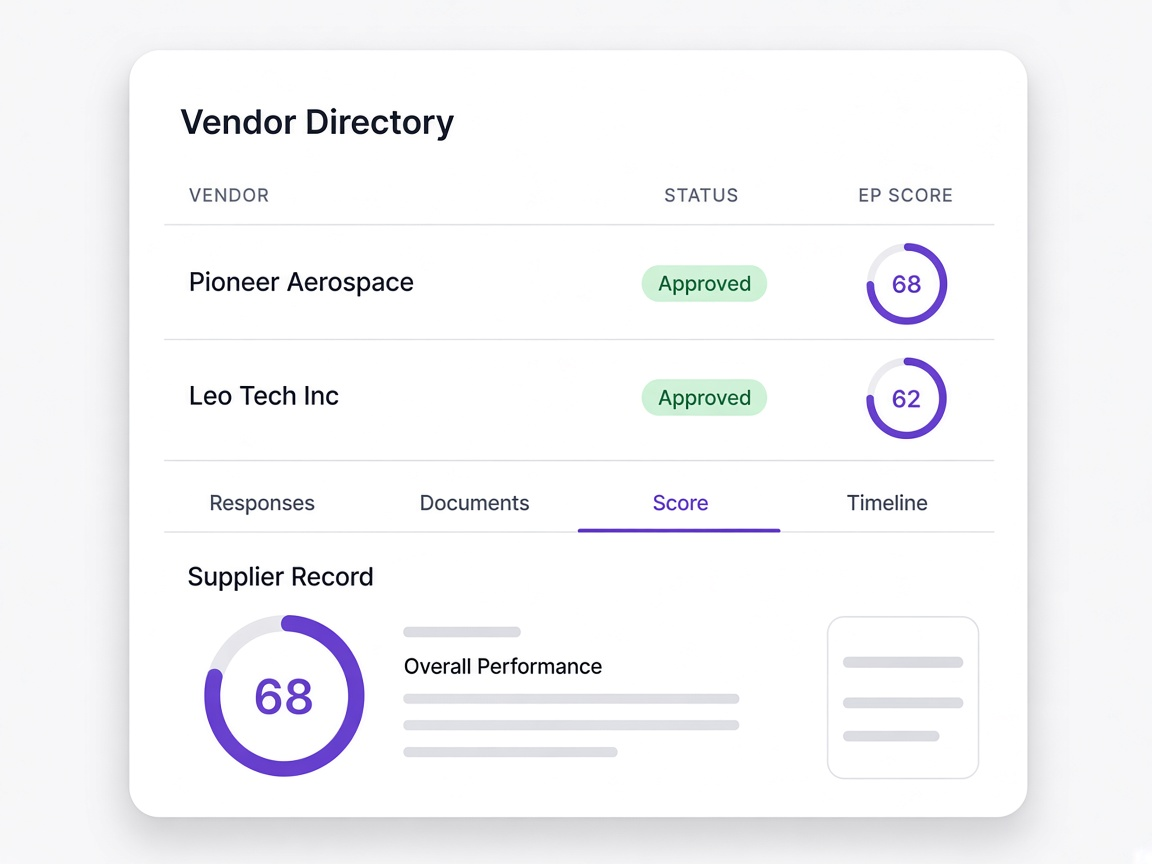
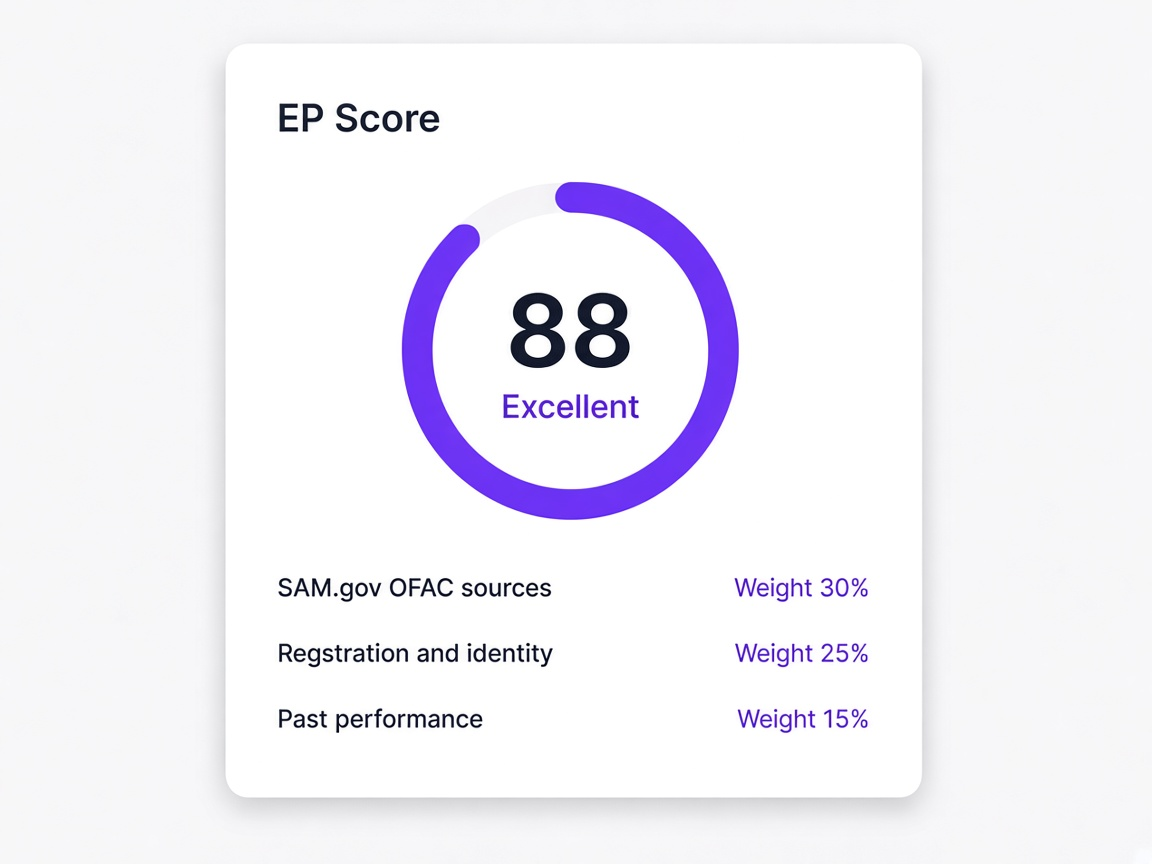
Most risk ratings hand you a number and ask you to trust it. The EP Score is built from public records you can name, weighted in proportions you can see, and every category opens to the sources that produced it.
Reading a supplier quickly, then looking properly
A number is useful for triage and useless as a decision. The point is to tell you where to look, not what to conclude.
You can defend the number
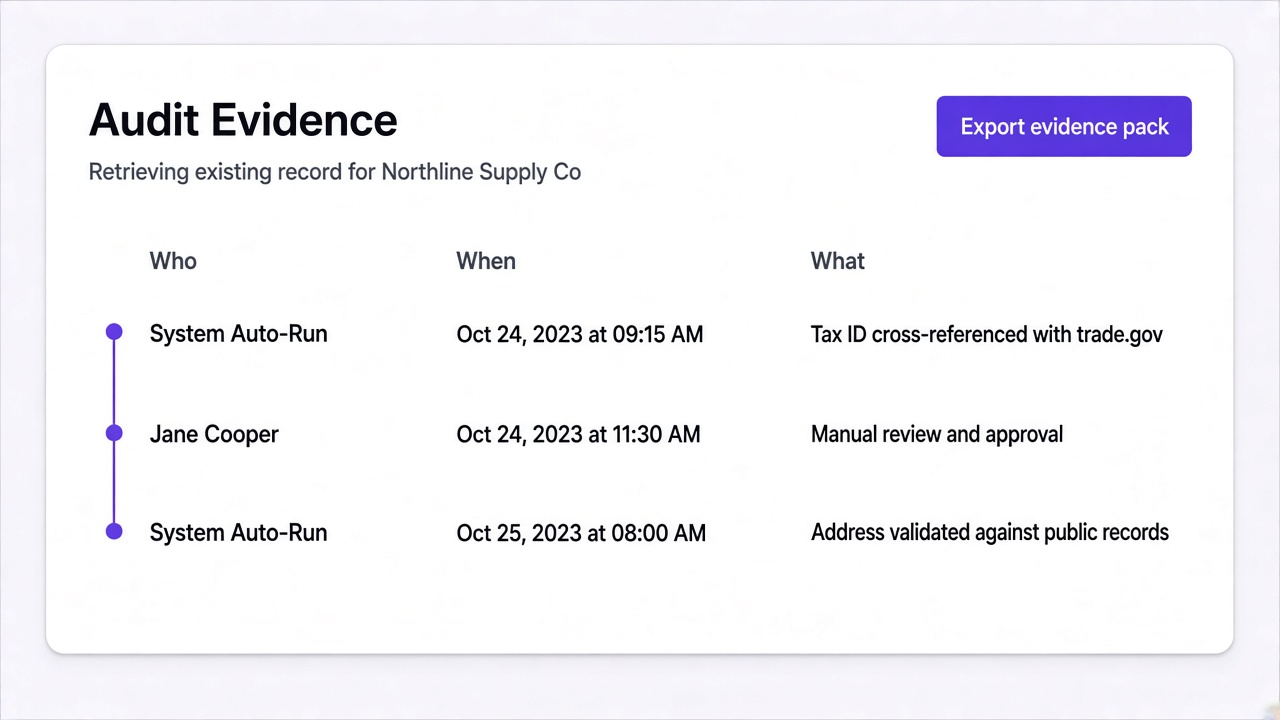
Because each category names its sources and shows its weight, you can explain to anyone why a supplier sits where it does rather than citing a rating you cannot break down.
Attention goes where it belongs
A score of 45 on registration and identity tells you precisely what to check. An overall number alone tells you only to worry.
It stays current on its own
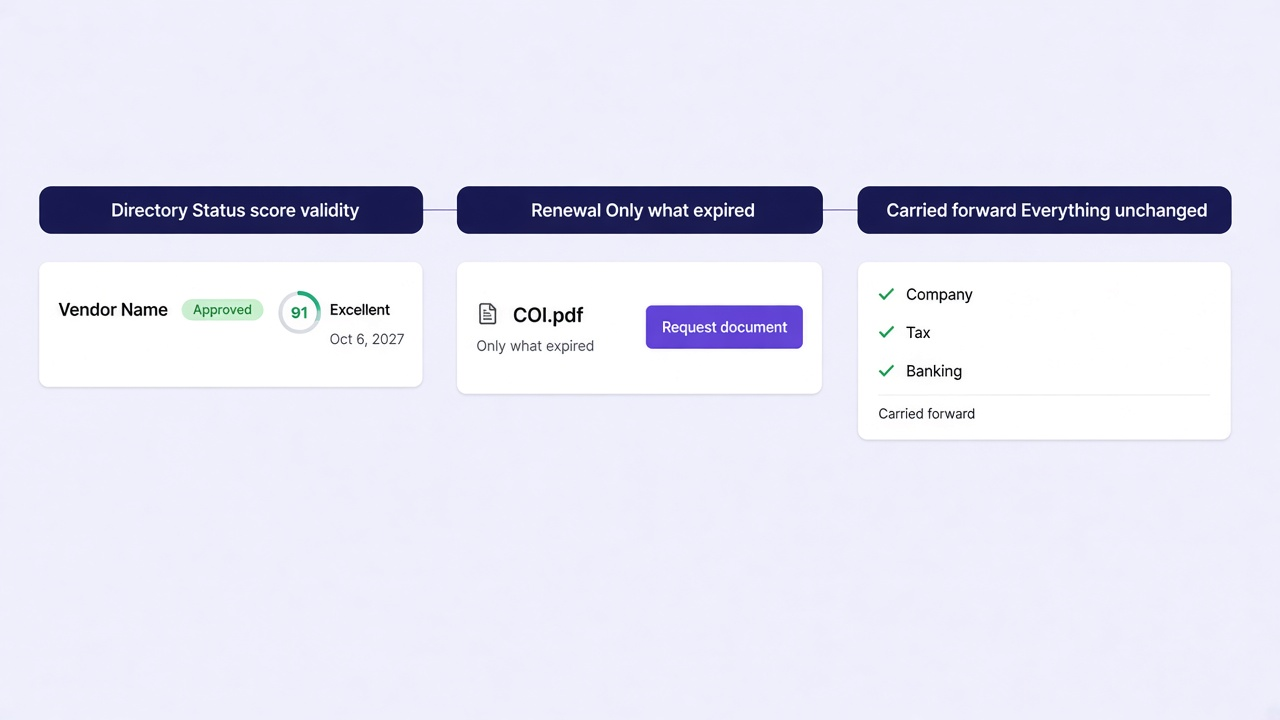
The score refreshes when public records change or the supplier updates their submission, so it reflects the position now rather than the day they were approved.
Moments a procurement team will recognise

A supplier scores lower than expected
Open the weak category and see the records behind it rather than guessing what went wrong.
Learn more
Finance asks why this supplier was approved
Answered from the category breakdown and the sources, not from memory.
Learn more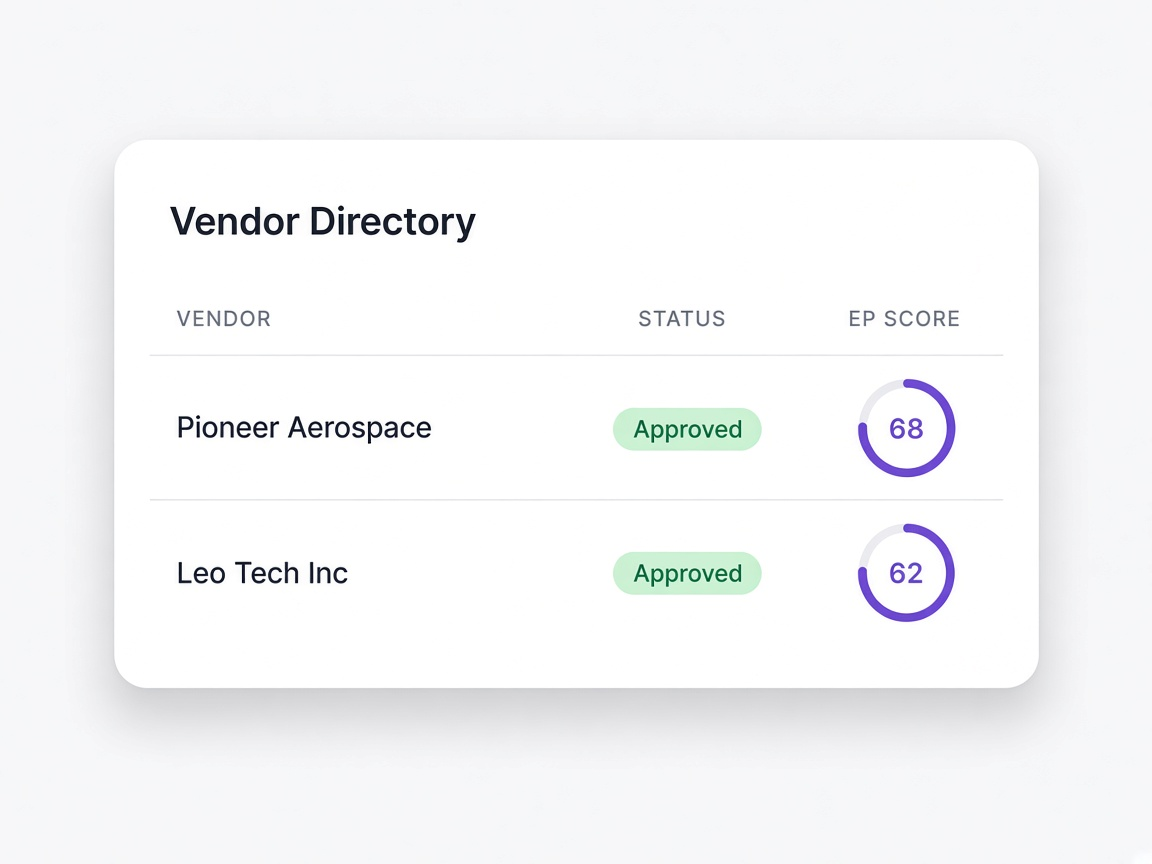
A score moves overnight
The movement carries its reason, so you know whether it needs attention before you open it.
Learn more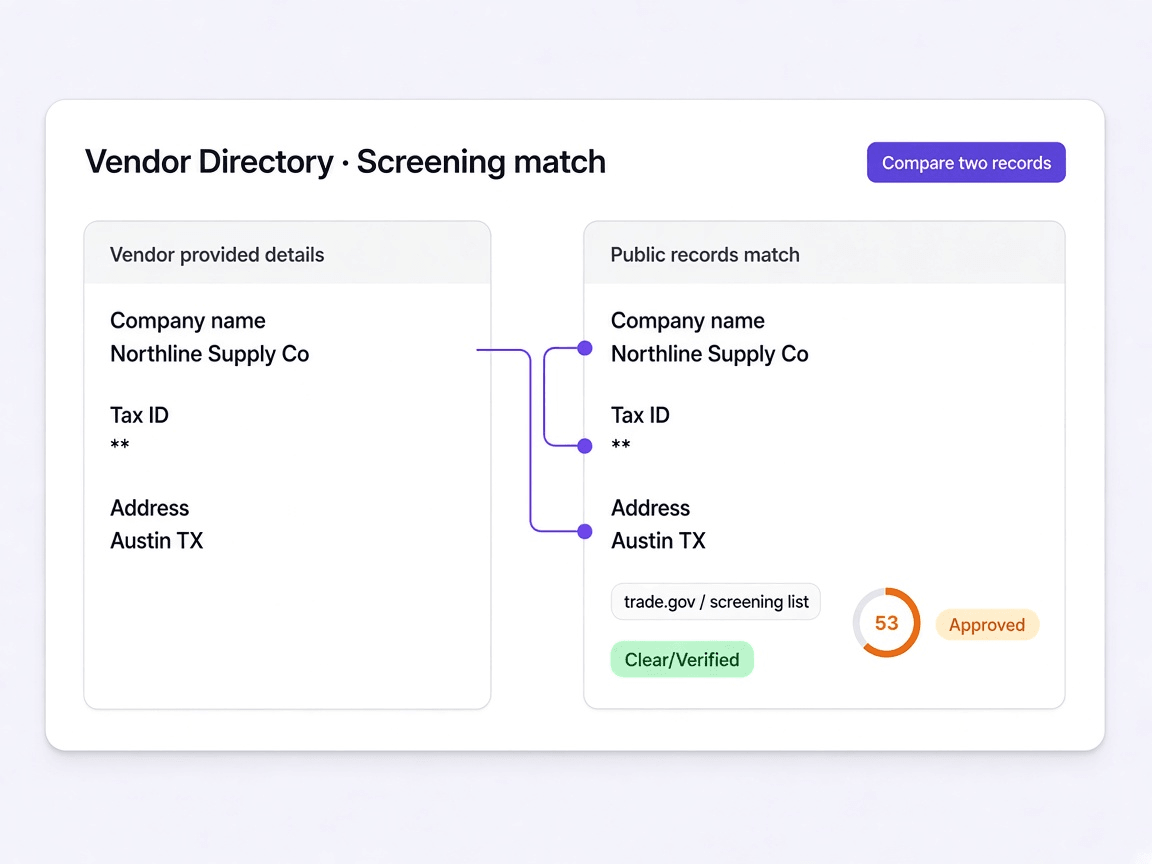
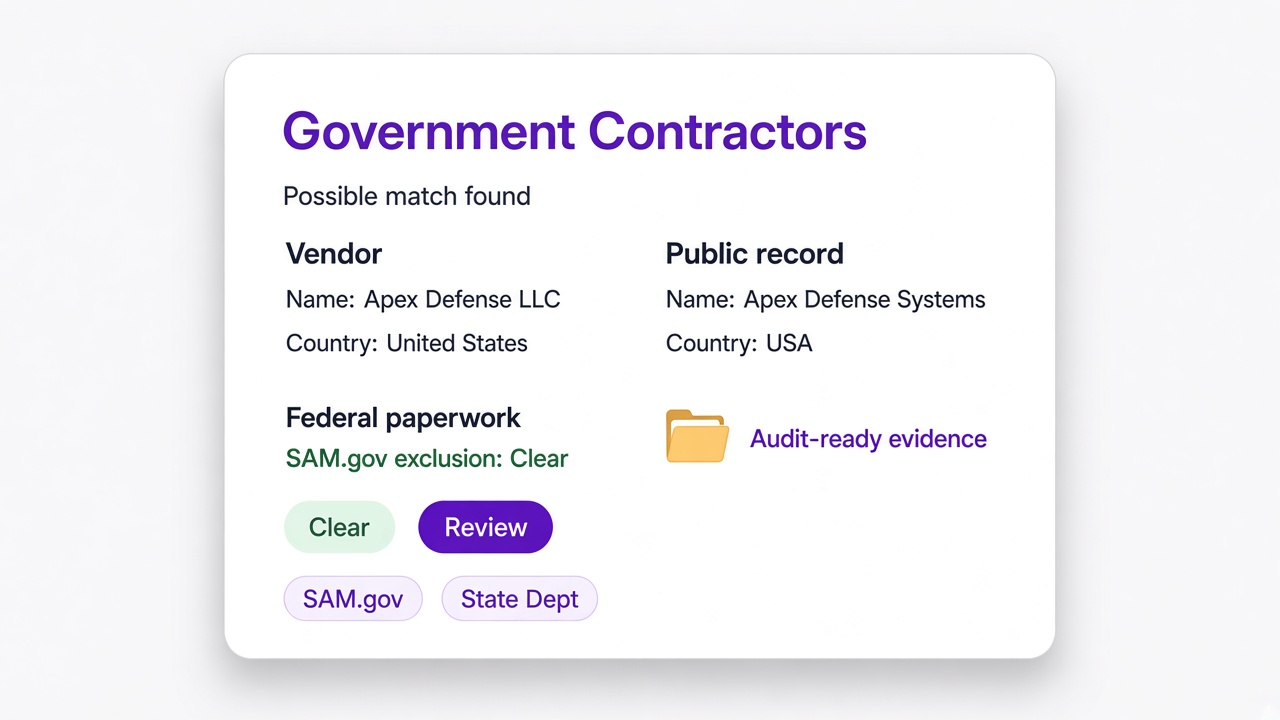
A possible name match appears
Shown against your own supplier record so a false positive is resolved rather than escalated.
Learn moreAnd why nobody quite trusts them
Everyone has seen a risk rating ignored because nobody could explain it.
A proprietary model
The methodology is the product, so it cannot be shown. You are asked to trust a number whose inputs are commercially confidential.
Named public records
Federal registration, exclusion and sanctions lists, award history and public filings, with the weight each carries stated on the record.
A red flag, unexplained
A poor rating arrives with no indication of which part is weak, so the only response is to redo the diligence yourself.
A specific weak category
The overall number breaks into categories, each with its own score, so a low result points at exactly what to look at.
Concluded for you
A name match against a sanctions list becomes a verdict, and disputing it means an appeal process rather than a look at the evidence.
Shown with the evidence
A possible match is shown against your own supplier's details, including state, formation year and officers, so you can compare and decide.
A point in time rating
Scored at onboarding and refreshed when somebody remembers, which means the rating quietly ages out of usefulness.
Refreshed on change
It updates when the underlying public records change or the supplier updates their answers.