Third Party Due Diligence for Financial Services
Evidenced, repeatable and current
In financial services the diligence itself is rarely the problem. Showing that it was done, that it was done consistently, and that it is still true today is where third party programmes come apart.
Not that you checked, but that you can show it
Regulated diligence is judged on evidence and consistency. A programme that works well but cannot be demonstrated is treated as one that does not work.
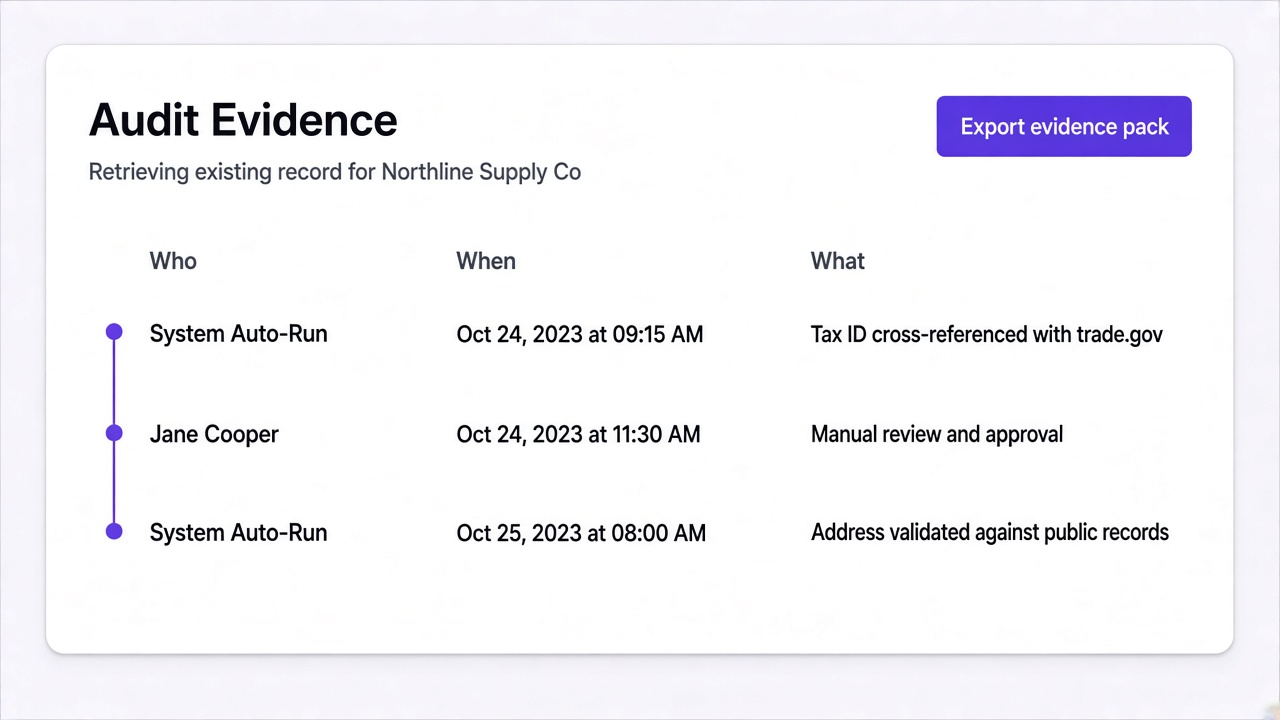
Evidence is retrieval rather than assembly
Checks, documents, approvals and dates sit on the vendor record, so producing the diligence file is a filter rather than a project.
Diligence is consistent across the population
Questionnaires and rules apply on creation rather than depending on who onboarded the vendor, so the population behaves the same way.
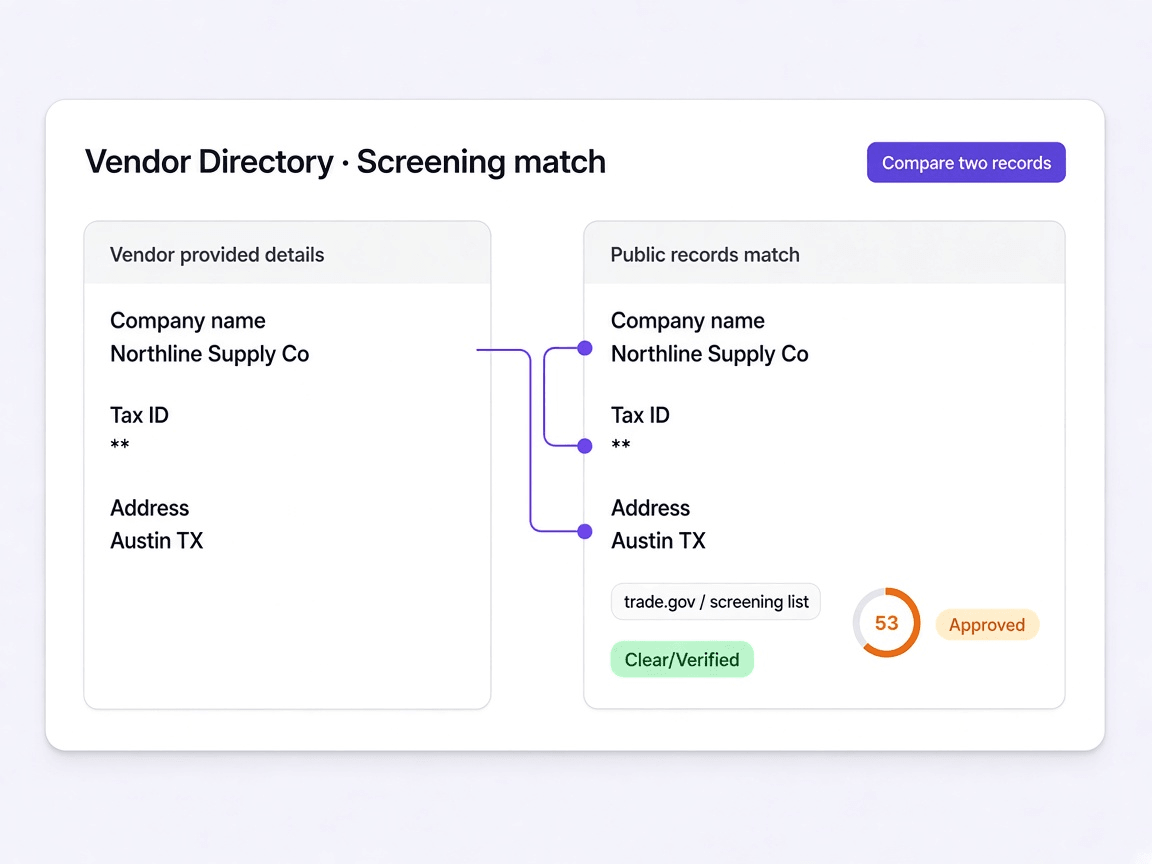
The position stays current
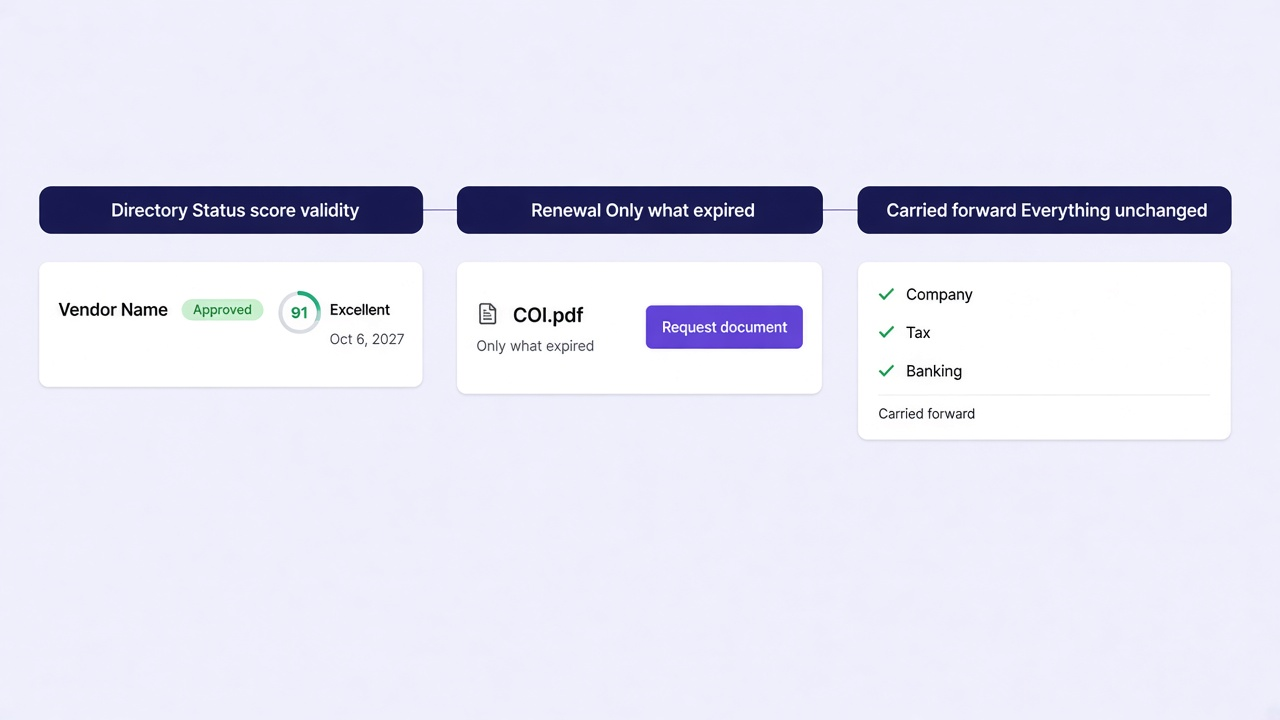
Screening runs continuously and documents track to expiry, so a vendor cleared two years ago is not still recorded as cleared by default.
Moments a third party risk team will recognise
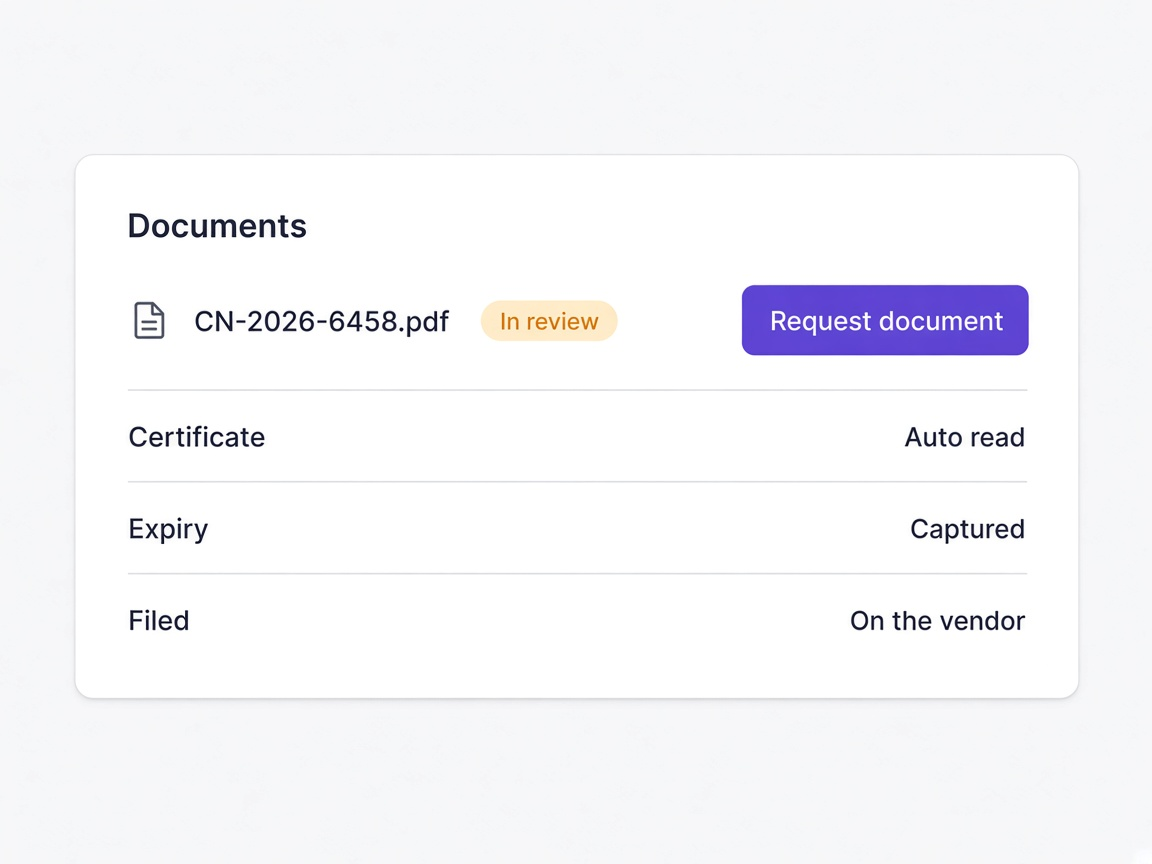
A diligence file is requested
Produced by filter, with documents and dates attached rather than gathered from three systems.
Learn moreA vendor appears on a sanctions list
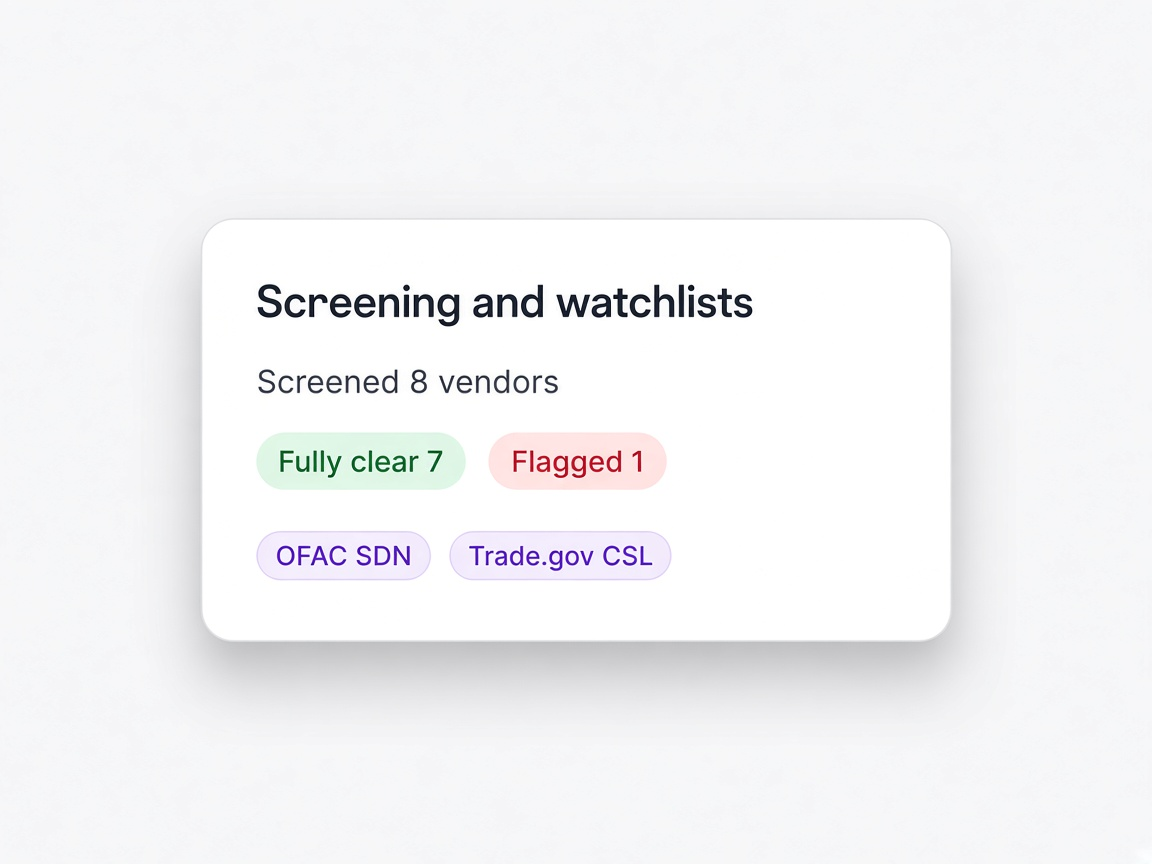
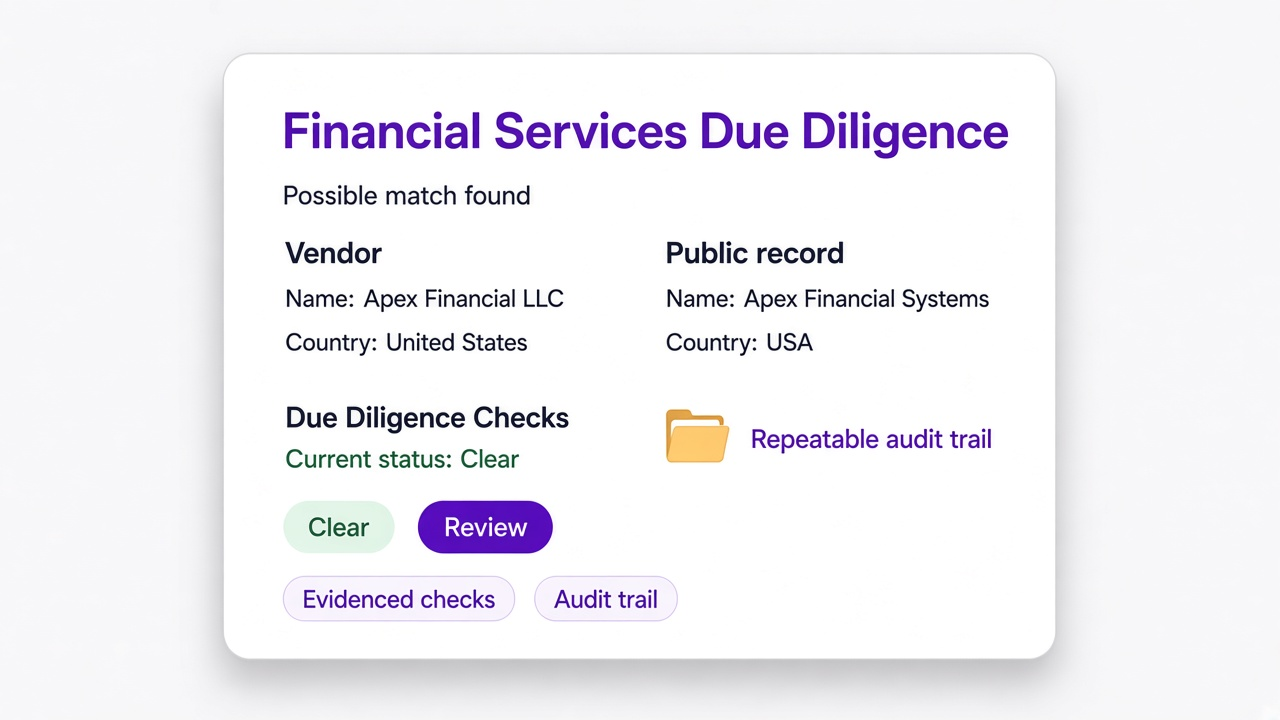
Caught on the next cycle, shown with both records so the decision is yours.
Learn moreA reviewer samples across vendors
Consistent because the questionnaire applied the same rules to all of them.
Learn moreSomebody challenges a risk rating
The score opens to its categories, weights and public sources.
Learn moreWhere programmes usually fail review
Rarely on the substance. Usually on evidence, consistency, or currency.
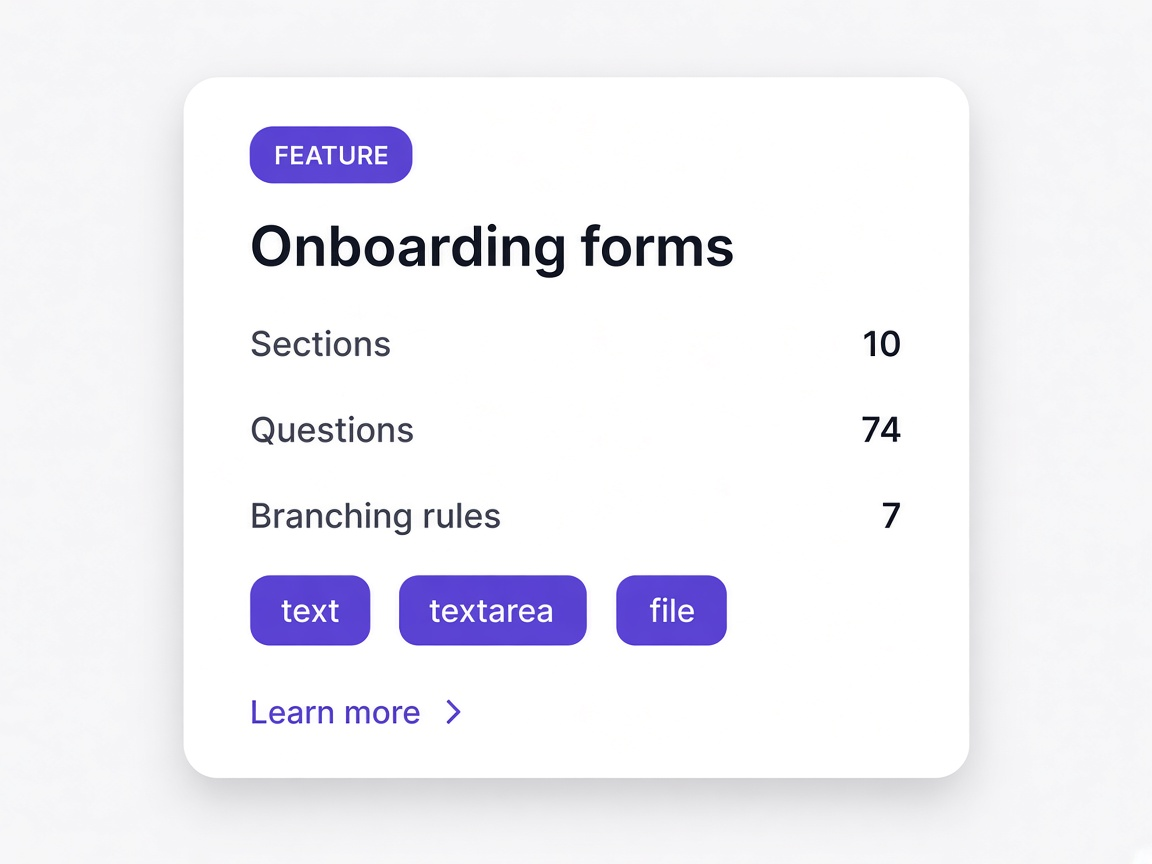
Spread across systems
Checks live in email, documents in a drive and approvals in a workflow tool, so producing a file means assembling from three places.
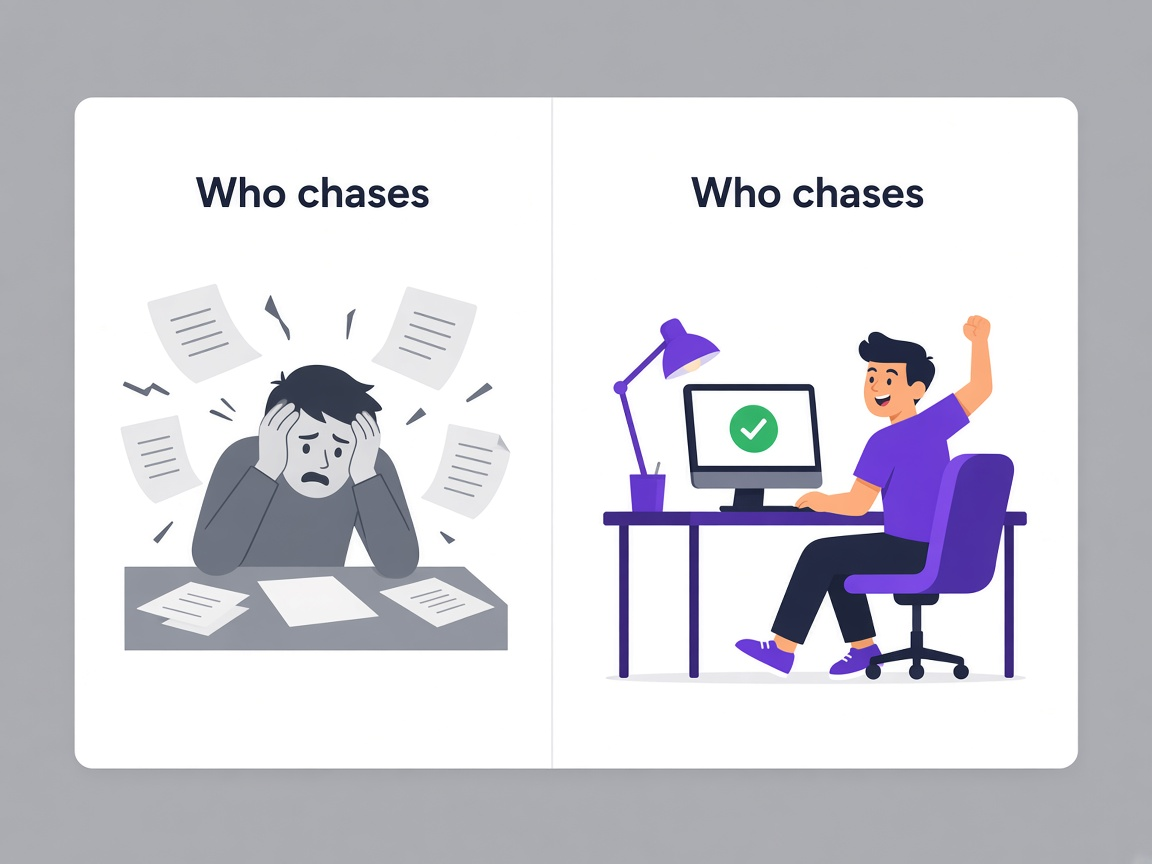
On one vendor record
Responses, documents, screening history, score breakdown and approvals sit together with their dates.
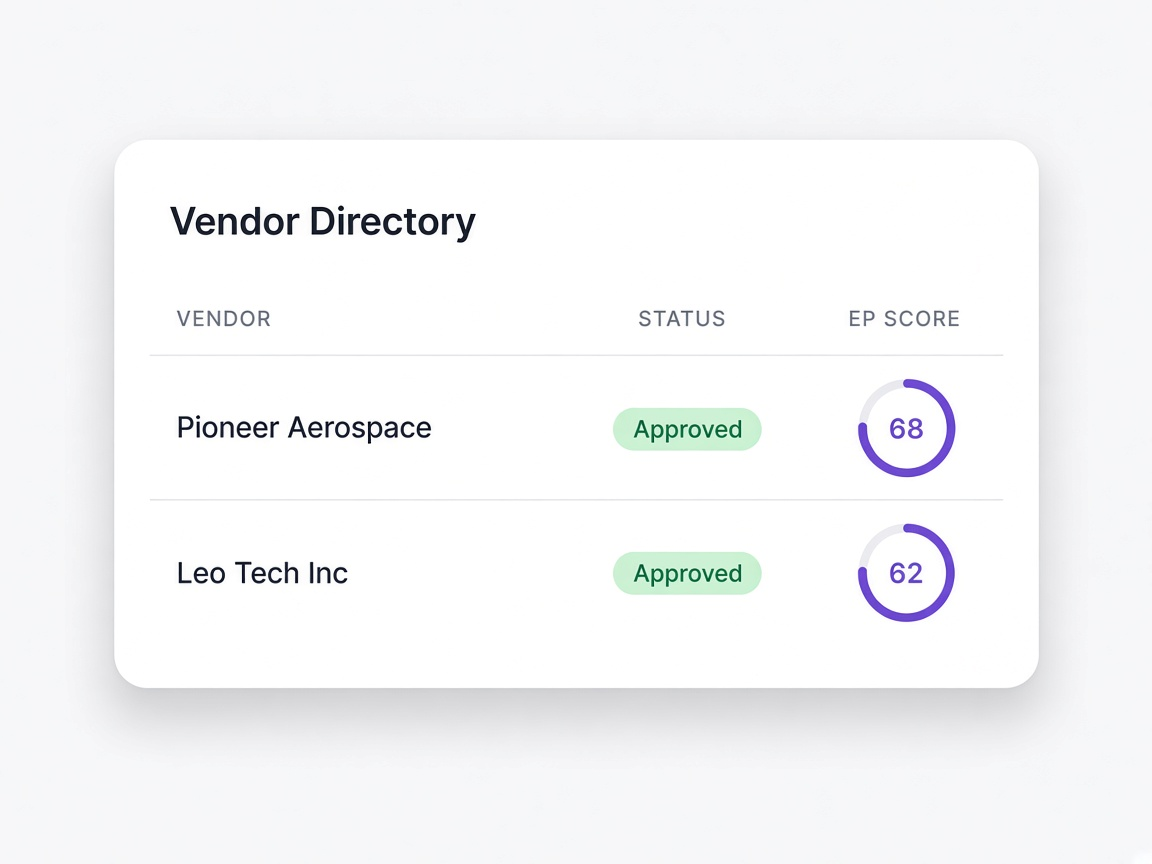
Depends who onboarded
Diligence quality varies with the person and the workload, and the variation is visible the moment a reviewer samples across the population.
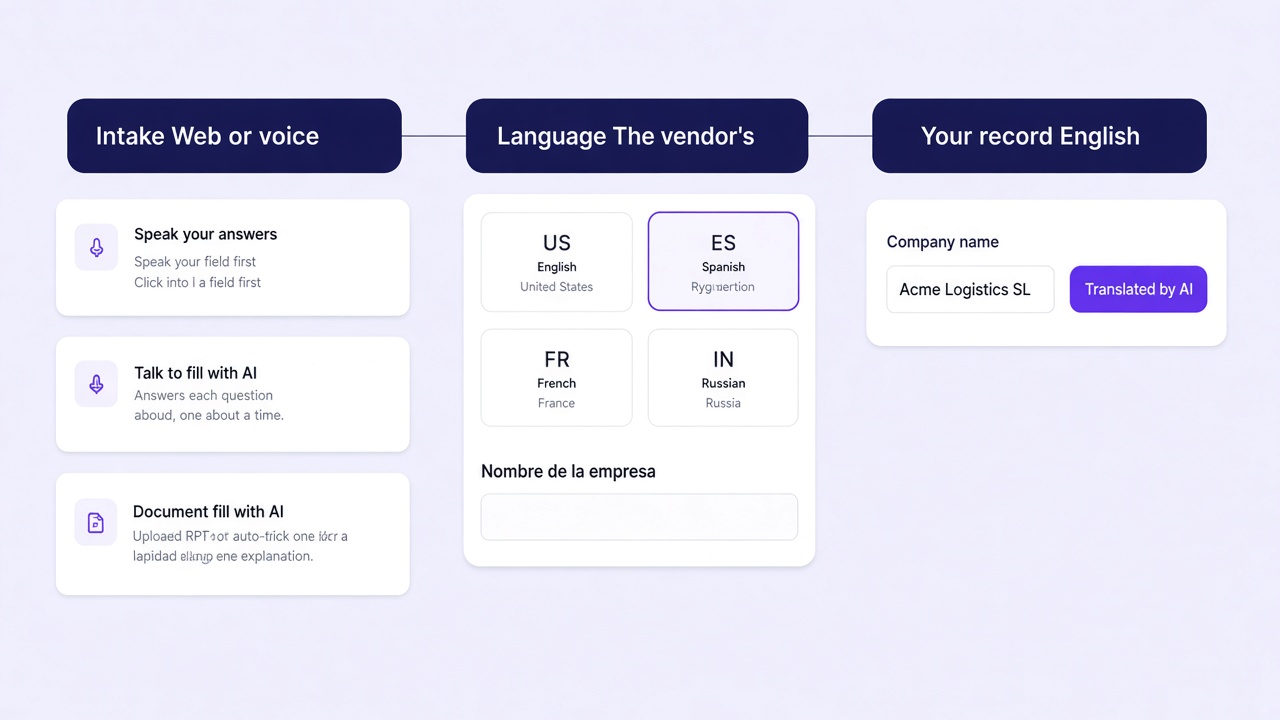
Applied by the questionnaire
Rules and required documents attach on creation, so vendors onboarded months apart look the same.
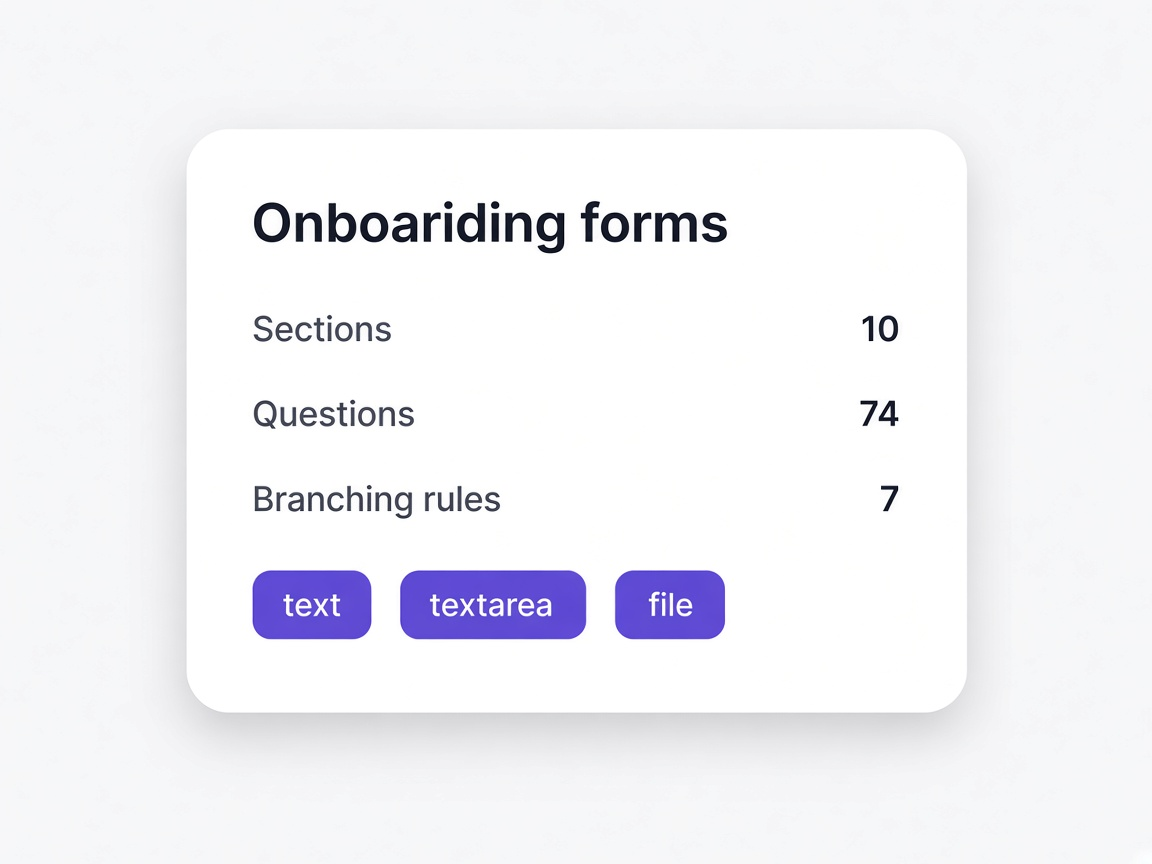
Annual review
A vendor is reviewed once a year, which means a listing appearing in month two is unaddressed for ten.
Continuous monitoring
Screening and scores update as the underlying records change rather than on a review calendar.
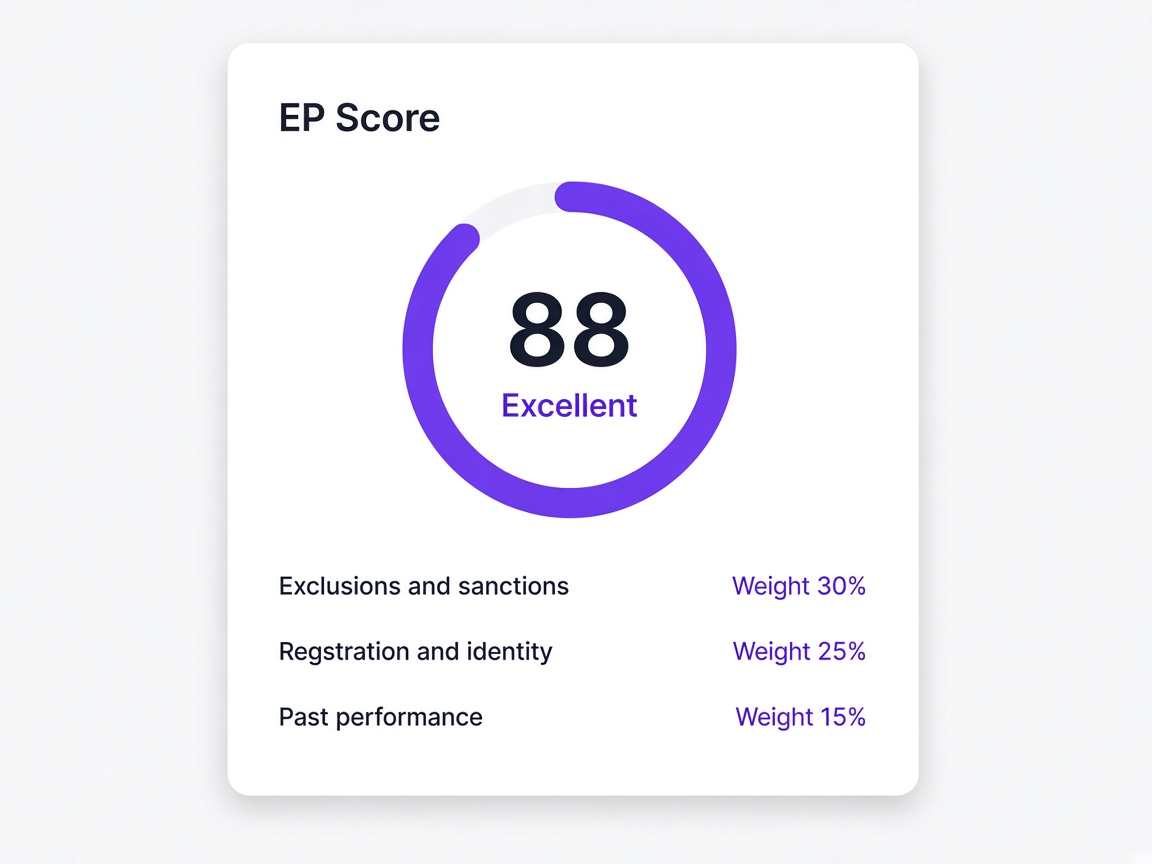
A rating you cannot explain
A proprietary risk grade cannot be broken down, so it is either accepted on faith or ignored entirely.
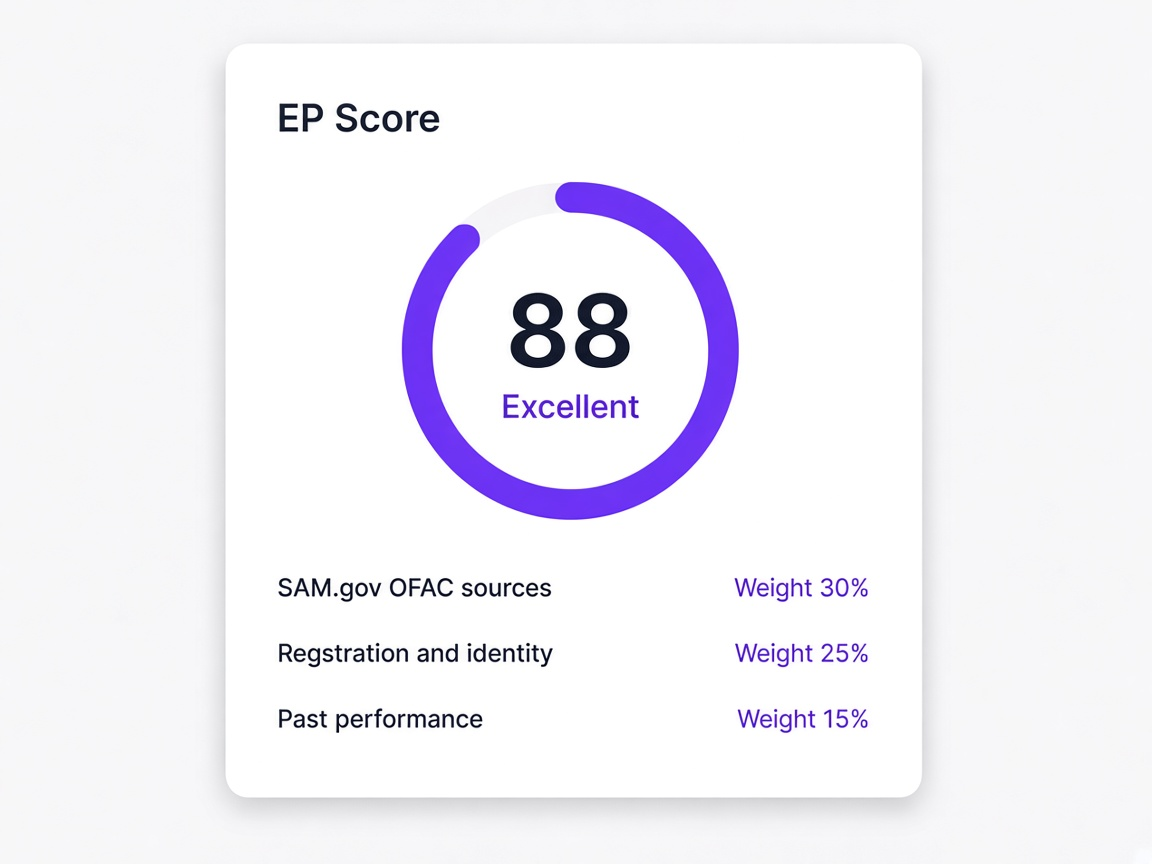
A score that opens
Each category shows the public records behind it and the weight it carries.