
Vendor Onboarding Checklist
What to collect, and in what order
Most onboarding checklists are a list of documents. The useful version is a sequence, because collecting things in the wrong order is what creates the follow-up emails everybody complains about.
A vendor onboarding checklist should cover six areas in order: identity and legal entity details, tax documentation, insurance and certifications, screening against exclusion and sanctions lists, banking and payment details, and a recorded approval. Collecting them in that sequence avoids most of the follow-up, because each stage determines what the next one needs to ask.
Six stages, in the order that saves work
Ordering matters more than completeness. Asking for banking details before you know whether the vendor passes screening wastes their time and yours.
| Stage | What you collect | Why it comes here |
|---|---|---|
| Identity and entity | Legal name, trading name, registration number, addresses, primary contact | Everything downstream depends on knowing exactly which entity you are dealing with |
| Tax documentation | W-9 for US entities, W-8 series for foreign ones, and any local equivalents | Determined by the entity answers above, which is why it follows rather than leads |
| Insurance and certifications | Liability cover, workers compensation, trade qualifications, quality certifications | Requirements depend on what the vendor will actually do, established during the entity stage |
| Screening | Exclusion, debarment and sanctions lists, plus any internal watchlists | Run before you invest further effort, because a finding here changes everything after it |
| Banking and payment | Account details, remittance contact, payment terms | Deliberately last, since a vendor who fails screening should never have been asked |
| Approval | A named person, a date, and the basis for the decision | The record of who accepted the vendor, which is the part most often missing later |
What each one actually needs
Identity and legal entity
Legal name as registered rather than as used commercially, registration or incorporation number, registered and operating addresses, and a named primary contact with a direct email. Trading names matter because screening against the wrong name returns nothing useful.
Tax documentation
A W-9 from US entities, a W-8BEN or W-8BEN-E from foreign individuals and entities respectively. Branch this off the entity answers so nobody receives a form that does not apply to them.
Insurance and certifications
General liability at minimum, with workers compensation where people will be on your premises. Capture the expiry date at the point the certificate arrives, because a certificate without a tracked date is a renewal you will miss.
Screening
Exclusion and debarment lists, sanctions lists and consolidated screening lists. Screen before asking for banking details, and screen again afterwards on a continuing basis rather than treating it as a one time gate.
Banking and payment details
Account name, bank, routing or SWIFT, account or IBAN, and the remittance contact. Collect these last and verify changes through a channel other than the one the change request arrived on.
Approval and record
A named approver, the date, and what the record showed at the time. This is the element most often absent when somebody asks six months later how a vendor was accepted.
Three patterns, all avoidable
None of these are about missing items. They are about when and how the items are requested.
| Pattern | What happens | What fixes it |
|---|---|---|
| Everything asked at once | A vendor receives a request for every document regardless of relevance, and abandons partway through | Branch the questionnaire so vendors only see what applies to their entity type and scope of work |
| Documents chased separately | The form is submitted, then somebody emails for the tax form and the certificate, restarting the wait | Make document uploads questions inside the onboarding form rather than a follow-up |
| Expiry captured by hand | Somebody types the renewal date into a tracker, and that step is the first to slip under volume | Capture the date when the document is read on arrival, so no manual step exists to skip |
Why banking comes last
This is the single most common sequencing mistake, and it is worth stating plainly.
| If banking is collected | Consequence |
|---|---|
| Before screening | A vendor who fails screening has already handed over account details you now have to handle and dispose of properly |
| Before scope is known | Payment terms are agreed before anybody establishes what the vendor will actually do |
| After screening and approval | The vendor provides details once, at the point they are genuinely becoming a supplier, and the change verification process is cleaner |
About vendor onboarding checklists
What should a vendor onboarding checklist include?
What order should the stages run in?
Why collect banking details last?
Should every vendor answer the same questions?
How do we stop chasing documents afterwards?
What is most often missing from a completed onboarding?
How often should the checklist itself be reviewed?
Where to go next
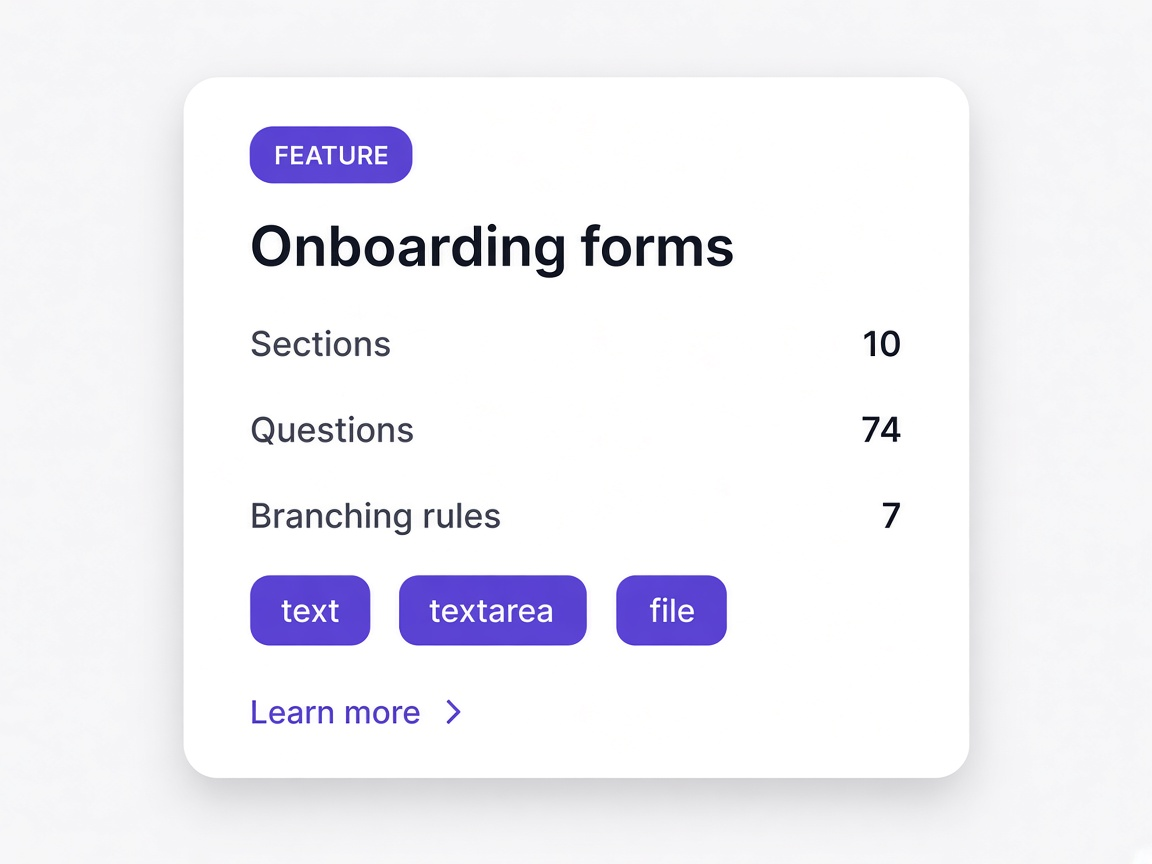
The vendor onboarding process
A stage by stage walk through of what happens between invitation and approval.
Read more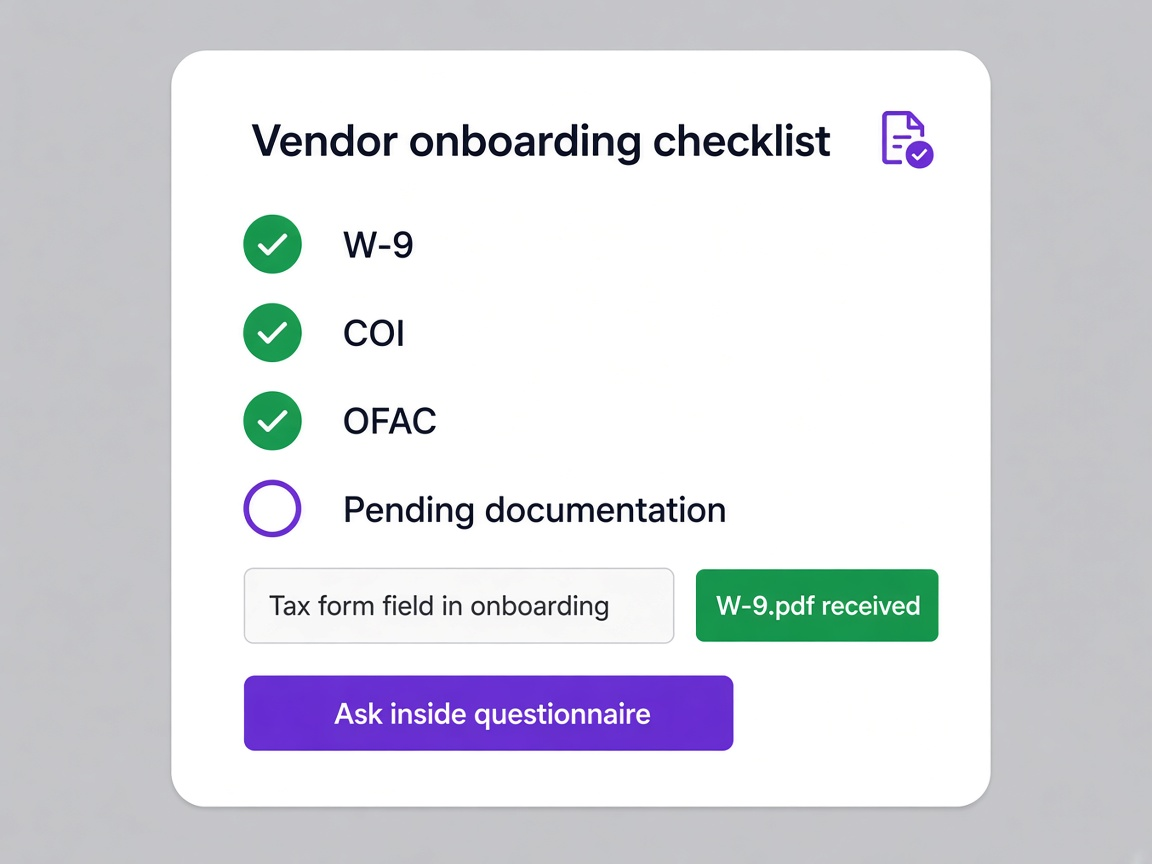
W-9 vs W-8BEN
Which tax form to request from which vendor, and how to branch it automatically.
Read moreCollecting W-9 forms automatically
Asking for tax documents inside the questionnaire rather than by email.
Read more