The Vendor Onboarding Process
From request to approved supplier
Onboarding is usually described as a form. In practice it is a handover between three parties, and every delay sits at one of the handovers rather than inside the form itself.
The vendor onboarding process runs in five steps: a request from the business, qualification by procurement, submission by the vendor, verification and screening, and a recorded approval. Most delay occurs at the handovers between those steps rather than within them, particularly between the request and the invitation, and between submission and verification.
And who actually owns each one
Naming the owner matters, because the steps without a clear owner are precisely the ones that stall.
| Step | Owner | What happens |
|---|---|---|
| Request | The business | Somebody needs a supplier and asks for them to be set up, usually with less detail than procurement needs |
| Qualify | Procurement | Decide whether this vendor is needed, whether an existing supplier covers it, and which onboarding questionnaire applies |
| Submit | The vendor | The vendor completes the questionnaire and uploads documents, in their own time and often in a second language |
| Verify | Procurement and compliance | Documents are read, screening runs against exclusion and sanctions lists, and a qualification score is produced |
| Approve | A named person | The decision is made and recorded, with the basis and the date |
The handovers, not the steps
Between request and invitation
The business asks for a vendor and procurement needs more detail before sending anything. This gap is invisible to everybody and frequently the longest part of the whole process.
Between invitation and submission
The vendor receives a long form, starts it, and stops. Without visible progress nobody knows whether they are working through it or gone.
Between submission and verification
Documents arrive and wait for somebody to open them. At volume this queue grows quietly and nobody owns it.
Between verification and approval
Everything is ready and the approval waits on one person's inbox, which is the most frustrating delay because the work is already done.
Removing waiting, not removing checks
Every one of these removes a wait rather than a control, which is why they shorten the process without weakening it.
| Change | Effect |
|---|---|
| Send the questionnaire without a full request first | The vendor starts providing details while the business request is still being clarified, running two steps in parallel rather than in sequence |
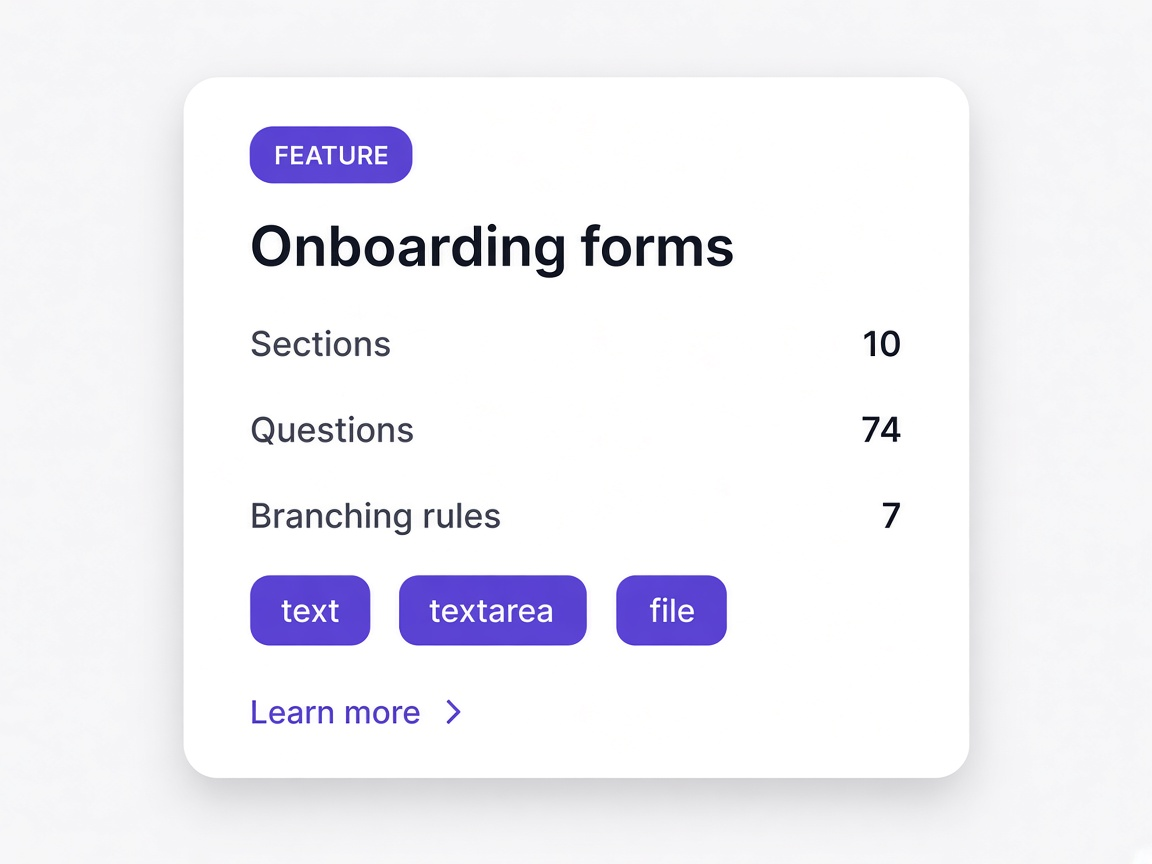
| Branch the questionnaire by vendor type | A shorter, relevant form gets completed sooner and generates fewer clarification emails |
| Read documents on arrival | The verification queue never forms, because documents are read and filed as they land rather than waiting for a person |
| Screen continuously rather than at a gate | Screening stops being a step that blocks approval and becomes a background process that runs regardless |
| Make progress visible | A vendor who stalled is chased automatically rather than waited on, which removes the longest silent gap |
The same process, without the dead time
| Step | Typical | When the waits are removed |
|---|---|---|
| Request to invitation | Days, while details are clarified | The invitation goes out immediately and details are clarified in parallel |
| Invitation to submission | Open ended, with silence | Visible progress, automatic reminders, and a known reason when it stalls |
| Submission to verification | A queue that forms at volume | Documents read on arrival, so no queue exists to clear |
| Verification to approval | Waiting on an inbox | A short queue of decisions that only contains items needing a person |